

Being yourself: The fascinating science behind dressing like you mean it
Imagine getting dressed and actually feeling like your totally glorious self in your outfit. Here's how researchers measure how aligned you and your clothes are.

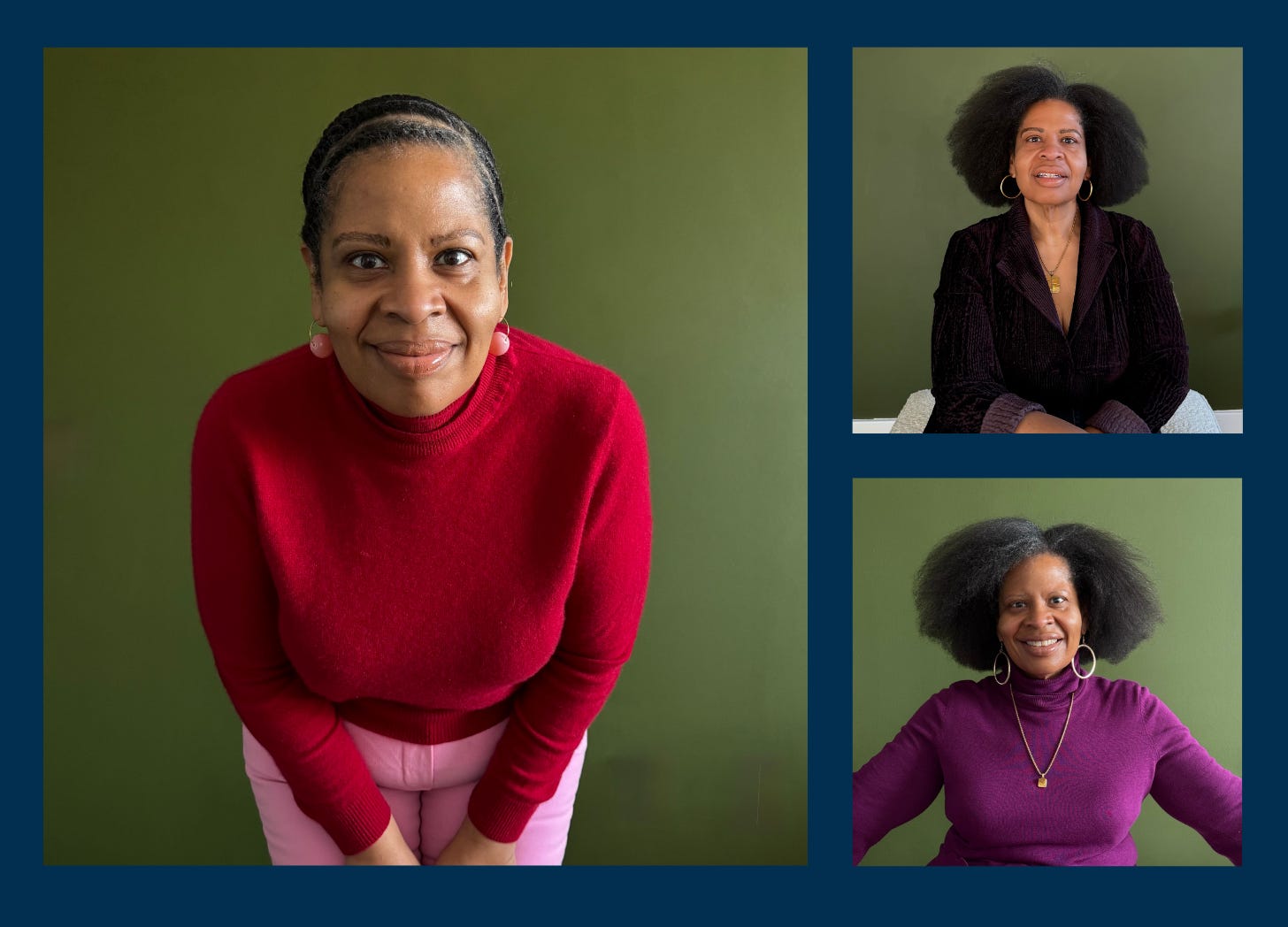
Hello!
Remember Cookie Monster? (Not the muppet, but the faux-fur blue jacket I found on a thrift shopping trip that I’ve since regretted leaving on the rack?)
Ever since I left it behind, I’ve been looking for another. (I think I’ve found one!) I’ve also been questioning why I left it.
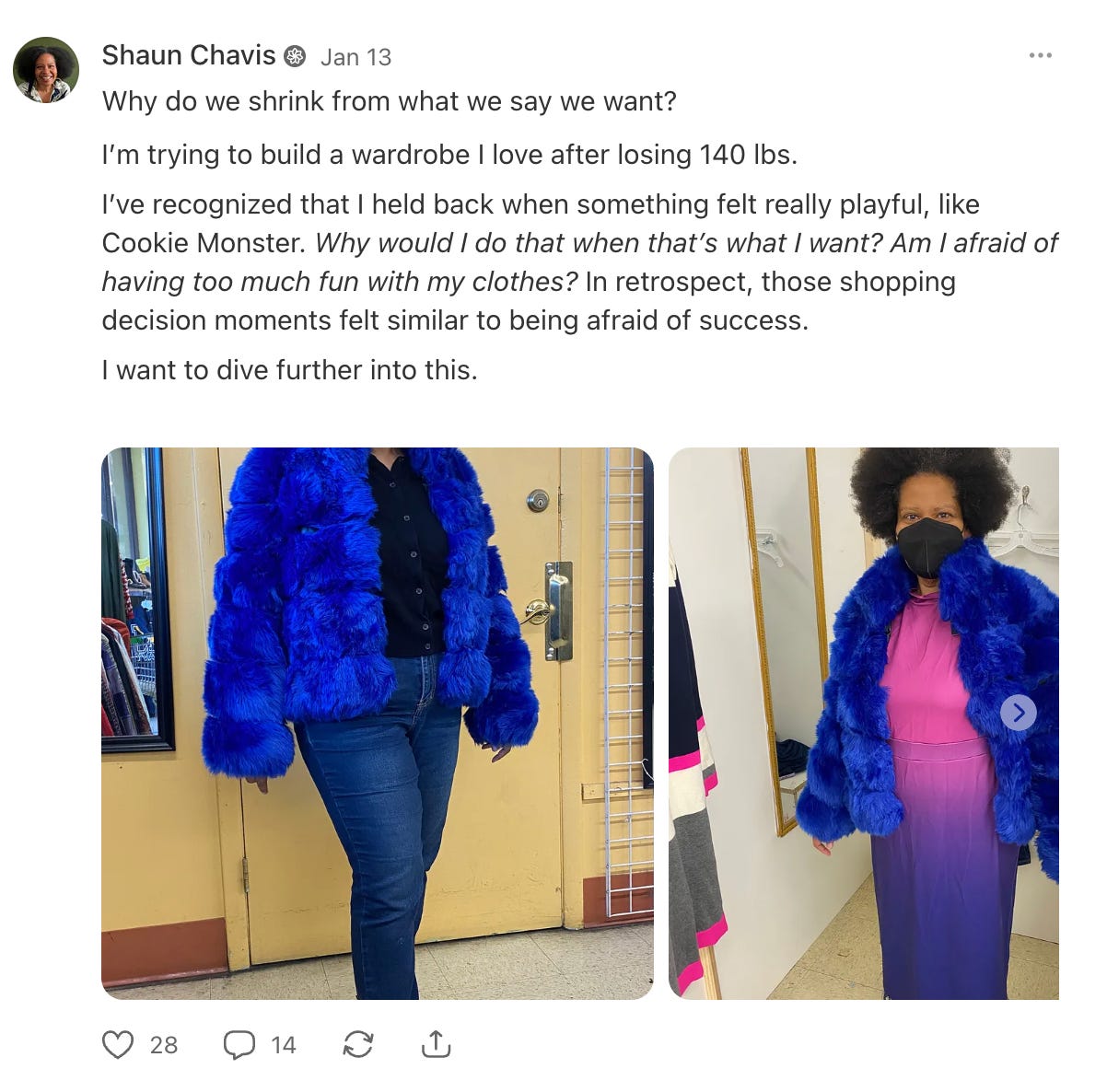
I wondered what the psychology is behind this kind of reluctance, and whether it’s related to imposter syndrome (feeling like a fraud—and being afraid someone will find out) or the fear of success. Or both.
Part of why I’m taking my time to build a new wardrobe—and why I write this newsletter—is because I believe that developing the ability to express ourselves through clothing can help develop the confidence to express ourselves in other areas: to unapologetically be who we are and love it, or to speak up. To be bold.
I decided to reach out to my favorite fashion psychologist, Shakaila Forbes-Bell, to see if she could help unpack this. I don’t know her at all, yet she agreed to a Q&A! Once I read her responses, I wanted to give more context about her work before sharing the interview with you.
So I’m creating a little mini-series, Being Yourself. This week’s newsletter dives into my archive. I wrote this post last year, but I feel it’s a good set up for the Q&A I’ll share in the next newsletter. (And for most of my readers, it will be new to you.)
Part 2 of the Being Yourself series:
Why we hesitate to wear the clothes that express who we are
A Q&A with Fashion Psychologist Shakaila Forbes-Bell
I once thought of style as frivolous and indulgent.
But today, I know that if I’m going to take on the world, I’ve gotta walk out the door like a champion.
The impact of not seeing yourself in your wardrobe
So many of us who are or have been in larger bodies carry embarrassment, shame, and internalized weight bias.
The fashion industry is notorious for not producing plus-size clothes that allow people to express who they are or to feel confident.
Between these, it can be hard to speak up for yourself, lead, sell, negotiate, advocate, push obstacles aside, change the world, step out on a dance floor and shake your groove thing, or otherwise show up the way you need to.
…Or to even think you deserve to show up the way you’d like.
For years my only criteria for clothes was “Does it fit?”
At some level, I didn’t believe I had the choice of buying clothes that express who I am, and I wasn’t aware of how much I could expect from my clothes. Instead, especially as a child and teen, I felt I had no choice but to choose between clothes I didn’t like.
(I’m revisiting these common experiences because I believe change starts with acknowledging what’s going on. Whatever is true for you, recognize it and call it out.)
Once I started thinking about building a post-weight loss wardrobe, I wanted clothes that reflected my identity.
Who even am I, expressed in clothes?
So much of this journey is mental.
This quiz helped me reclaim the possibility of self-expression through style
Researchers measure how well our clothes reflect our self-identity using a proximity of clothing to self (PCS) scale.
I first came across it while reading Big Dress Energy by British fashion psychologist Shakaila Forbes-Bell.
It includes a list of statements and uses the Likert scale to rate whether and how much those statements are true for each person.

Statements like these from the PCS scale blew my mind—I hadn’t thought of my clothes in these ways:
“I’m careful about buying from certain retailers because I want my clothes to align with my personal beliefs.”
“I own clothes and accessories that remind me of happy moments in my life.”
“I know how to control the way I’m perceived through my style.”
“I use my clothes and accessories to express my culture.”
“After I get dressed, I always check to make sure I feel comfortable.”
These were things I’d never expected from my clothes. I didn’t know I could.
The fashion industry doesn’t offer all of these opportunities in plus sizes.
I felt I’d been disconnected from the things a wardrobe can do besides hide me. And I began to want those empowered, personal connections.
The PCS scale helped set the tone for wardrobe building for me.
(I’m not striving to align my life with every statement in the survey. An example is, “I always treat my skincare routine as an opportunity for self-care.” Cleansing and moisturizing my face doesn’t feel like self-care to me, at least not the kind I consider mentally and physically restorative.)
Where to take the PCS quiz for free
If you’d like to take the entire survey, there’s a free version online. Check out the Big Big Dress Energy Quiz on Dr. Forbes-Bell’s website (it’s inclusive of men and non-binary people as well as women). It’s 37 questions and there are no icky sales pitches at the end.
Housekeeping
If you know someone who would like this post, please share!
I love this approach! I recently realized that I own no less than 3 pantsuits in bright colors: fuschia, mint green, and pink floral. I feel truly myself when I wear these outfits in professional leadership settings. I feel like I'm saying, "I don't take myself too seriously, but you should."
I know how good I feel in an outfit that feels “right,” and yet I rarely feel justified in spending money on clothes that are outside my usual (very utilitarian) wardrobe. Most days I wear the same thing with slight variations - one version for spring/summer and one for fall/winter. I’m comfortable, but there is little to no whimsy or actual style in what I’m wearing. I’d like to change that. It’ll take baby steps, but maybe this year … 😊
Tks for the inspiration! Can’t wait for the rest of the series.